
Danby Aero
Builders Risk & Project Insurance for Aircraft Builders
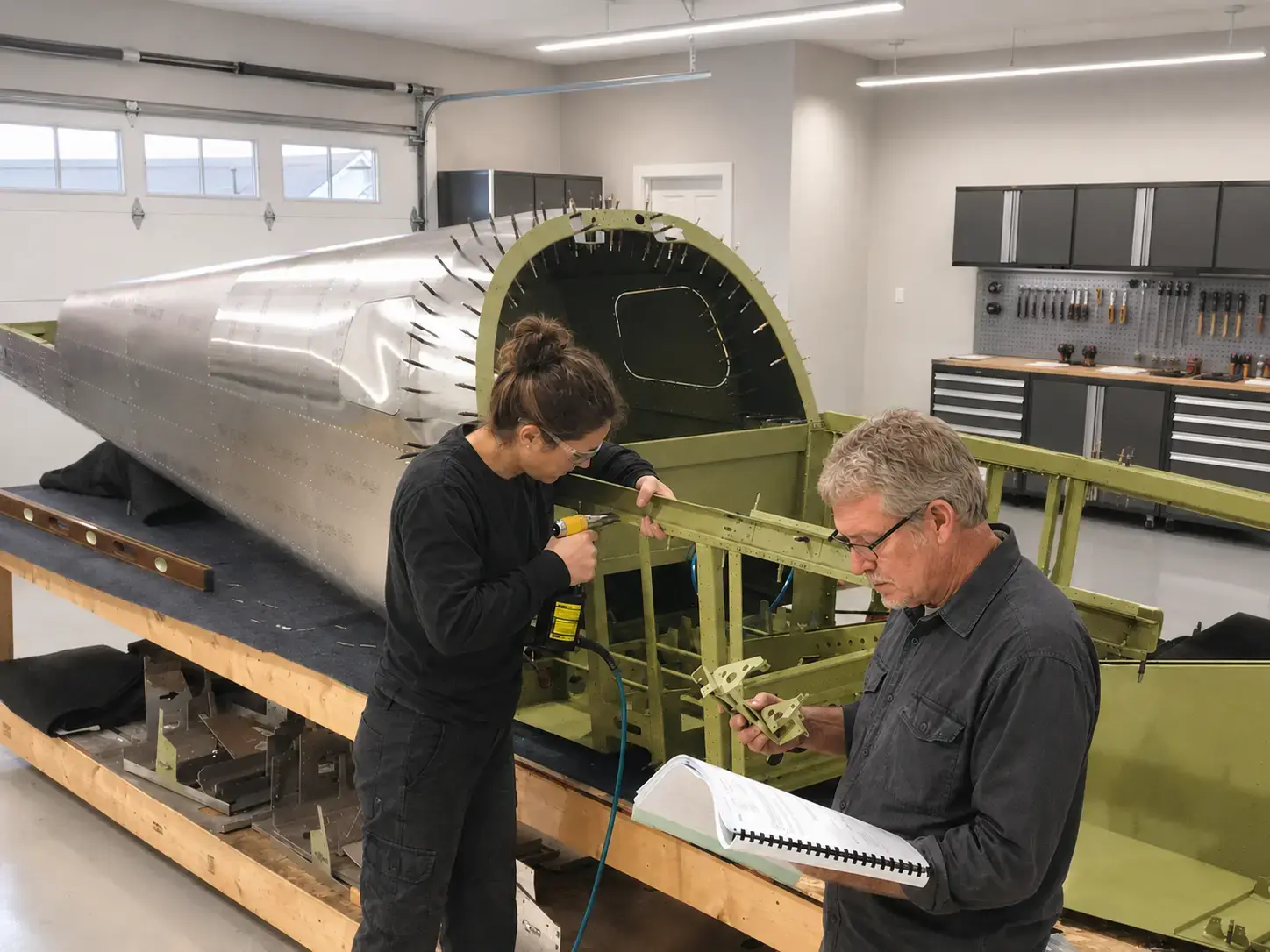
A kit aircraft project can begin as a crate of parts, a set of plans, an engine, avionics, and many hours of careful work. Its value can grow quickly—well before the aircraft is ready to taxi or fly.
Danby Aero helps kit builders, amateur builders, and restorers evaluate insurance options for the construction phase and prepare for the transition to operational aircraft insurance when the project is ready for flight.
The construction phase has its own insurance needs.
Builders Risk and Project Insurance may help protect the growing value of a kit-built, amateur-built, or restoration project while it is being built, assembled, stored, or worked on. Available protection depends on the insurer, the project, the location, the documented value, and the terms of the selected policy.
Depending on the policy and underwriting approval, items considered may include:
- Aircraft kits, plans, raw materials, and acquired components
- Completed assemblies, including wings, fuselage sections, empennage, and control surfaces
- Engines, propellers, avionics, instruments, and other high-value equipment
- Documented project value, including eligible labor where available
- Project storage at an approved home, workshop, hangar, or other location
- Project-related liability exposure, subject to insurer and policy terms
Do not assume a homeowners policy protects the project.
Aircraft-related property and liability exposures may be excluded or limited under a homeowners policy. If your project is stored in a garage, basement, workshop, or hangar, it is worth reviewing the situation before assuming the kit, components, work in progress, or related liability exposure is insured.
Review coverage as the project changes.
A project is not static. An insurance conversation is especially useful when the value, location, or operational exposure changes.
- Kit purchase and parts delivery: Establish an initial project value and storage location.
- Construction and assembly: Review the growing value of components, completed assemblies, and major equipment.
- Engine, propeller, or avionics installation: Revisit the project value before high-cost components are added.
- Moving to a hangar or different work location: Confirm the new location remains acceptable to the insurer.
- Engine runs, taxi, and first-flight planning: Prepare for the transition to insurance appropriate for operational exposure.
- Phase I flight testing and beyond: Review pilot qualifications, training, hull value, liability needs, and intended operations.
Start with the project you have today.
You do not need every receipt organized or the aircraft completed before contacting Danby Aero. We can begin with what you are building or restoring, the project’s current stage, where it is located, and the major components already acquired.
From there, we will help identify the details underwriters are likely to need and the appropriate next step for your project.
Prefer to reach the company directly? contact@danbyaero.com | (941) 270-3382
Important: The information on this page is general in nature and does not constitute an offer of insurance or a coverage determination. Coverage is subject to the terms, conditions, exclusions, limits, eligibility requirements, and underwriting approval of the issuing insurer. Contacting Danby Aero, submitting an inquiry, or scheduling a conversation does not bind, modify, renew, extend, cancel, or create insurance coverage. Coverage is effective only when confirmed in writing by an authorized insurer or properly authorized representative.